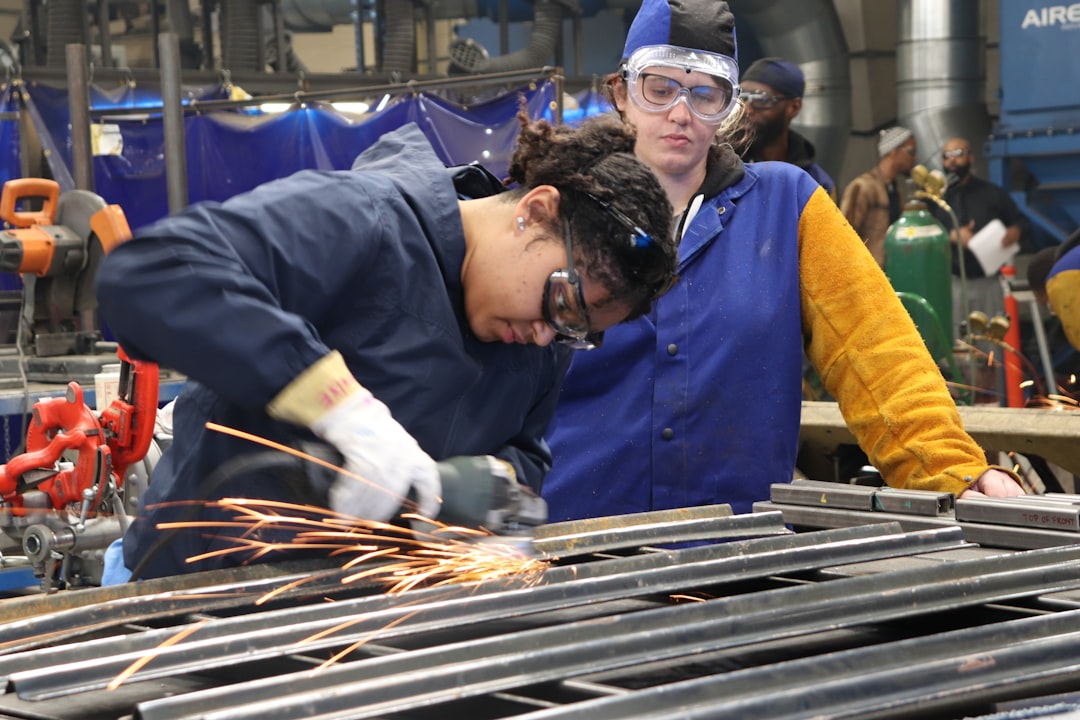
The skilled trades are experiencing a renaissance. As infrastructure ages and manufacturing evolves, the demand for qualified welders has never been higher. This presents a unique opportunity for those seeking a stable, hands-on career that offers both financial security and professional pride.
Navigating the path to becoming a certified welder can feel overwhelming. With so many options—from intensive welding school programs to flexible online welding courses—it is critical to understand what each path offers. This guide provides a clear, actionable roadmap for anyone ready to take the first step.
Why Welding Training Matters for Your Career
A formal welding training program is the foundation of a successful career in this field. It transforms raw potential into marketable skill. Without proper instruction, you risk developing bad habits that can compromise both safety and the quality of your work.
Employers actively seek candidates who have completed a recognized welding course. This credential signals that you have invested time in learning industry standards and have been tested on your practical abilities. It is your ticket to higher pay and better job opportunities.
- Higher Earning Potential: Certified welders consistently earn more than their non-certified peers.
- Job Security: Skilled trades are less susceptible to offshoring and automation than many other sectors.
- Career Mobility: A welding certification opens doors to specialized roles in aerospace, shipbuilding, and energy.
Understanding the Core Components of a Welding Course
A comprehensive welding course is built on two pillars: theoretical knowledge and practical application. The best programs balance these elements to create well-rounded professionals.
You will learn the science behind metallurgy, the properties of different metals, and the physics of the welding arc. This foundation allows you to troubleshoot problems and adapt to new materials on the job.
Hands-On Techniques You Will Master
The heart of any welding training program is the lab. Here, you will spend hours under the hood, practicing different techniques until they become second nature. Expect to work extensively with these core processes:
- MIG Welding (GMAW): The most common process, ideal for beginners due to its speed and ease of use. It is widely used in automotive repair and fabrication.
- TIG Welding (GTAW): The most precise and challenging process, requiring exceptional hand-eye coordination. It is the standard for aerospace, custom motorcycles, and stainless steel work.
- Stick Welding (SMAW): The most rugged and versatile process, often used in outdoor construction and pipeline work. It is excellent for welding thick, dirty, or rusty metal.
- Flux-Cored Arc Welding (FCAW): Similar to MIG but uses a special tubular wire. It is a favorite for heavy fabrication and repair work because of its high deposition rate.
Welding School vs. Online Welding Courses: A Critical Comparison
One of the most important decisions you will make is choosing between a traditional welding school and online welding courses. Each has distinct advantages, but they serve different purposes in your education.
The Case for In-Person Welding School
A physical welding school provides an environment that is impossible to replicate online. You have direct access to instructors who can correct your technique in real time. You also benefit from the peer learning that happens naturally in a workshop setting.
- Immediate Feedback: An instructor can see exactly what you are doing wrong and guide your hands to fix it.
- Access to Equipment: You get to use industrial-grade welders, plasma cutters, and grinders that you may not have at home.
- Structured Curriculum: Programs are designed to take you from zero to job-ready in a set timeframe, usually 6 to 18 months.
When Online Welding Courses Make Sense
Online welding courses are an excellent supplement, but they cannot replace hands-on training. They are ideal for learning the theory behind welding, understanding blueprints, and studying safety protocols. Many experienced welders use online courses to prepare for certification exams or to learn advanced techniques.
- Flexibility: Study at your own pace, from anywhere in the world.
- Lower Cost: Online courses are generally much cheaper than tuition at a physical school.
- Knowledge Foundation: Build a strong theoretical base before you ever strike an arc in a lab.
The most effective approach is often a hybrid one. Start with online welding courses to learn the basics, then enroll in a local welding school to get the critical hands-on practice you need to pass your welding certification.
Your Path to a Welding Certification
A welding certification is the industry-standard credential that proves your ability to produce sound welds. It is not a single certificate but a set of qualifications specific to different processes and positions.
The most recognized certifications come from the American Welding Society (AWS). To earn one, you must pass a rigorous test that involves welding a test coupon according to a specific code. The coupon is then inspected and bent to ensure it meets strict quality standards.
Steps to Earning Your Welding Certification
- Complete a Welding Training Program: Enroll in a reputable welding school or community college program that prepares you for AWS testing.
- Practice Intensively: Spend as much time as possible in the lab. Focus on consistency and bead quality.
- Choose Your Certification: Decide which process and position you want to be tested on. Common starting points are 3G (vertical) and 4G (overhead) plate tests.
- Pass the Test: Take the AWS certified welder test at an accredited testing facility.
- Maintain Your Certification: Most certifications require renewal every six months to two years, depending on the employer.
Essential Safety Gear for Every Welding Class
Safety is non-negotiable in welding. The environment is filled with hazards including intense UV radiation, molten metal, and toxic fumes. Any reputable welding course will teach you how to protect yourself.
Before you step into a welding school lab, ensure you have the following personal protective equipment (PPE):
- Auto-Darkening Welding Helmet: Protects your eyes and face from arc flash. The auto-darkening feature adjusts instantly when you strike an arc.
- Flame-Resistant Jacket or Sleeves: Made from leather or treated cotton to protect your skin from sparks and hot metal.
- Welding Gloves: Heavy-duty leather gloves that provide dexterity while protecting your hands from heat and cuts.
- Safety Glasses: Always wear them under your helmet to protect against slag chips and grinding debris.
- Respirator: Essential for welding on galvanized steel or in confined spaces where fumes can accumulate.
Career Opportunities After Welding Training
The skills you gain in a welding training program are incredibly versatile. They translate directly into a wide range of high-demand careers. The Bureau of Labor Statistics projects steady growth in the welding field, with thousands of new openings each year.
Here are some of the most common and lucrative paths you can pursue after earning your welding certification:
- Structural Welder: Work on buildings, bridges, and heavy infrastructure projects. This role often involves Stick and Flux-Cored welding.
- Pipe Welder: A specialized and high-paying field focused on welding pipes for oil, gas, and water systems. TIG and Stick are the primary processes.
- Aerospace Welder: Work on aircraft frames, engine components, and space vehicles. This requires exceptional TIG welding skills and attention to detail.
- Manufacturing Welder: Produce everything from farm equipment to medical devices. MIG welding is the most common process in this sector.
- Underwater Welder: Combine commercial diving with welding for offshore oil rigs and ship repair. This is one of the most dangerous and highest-paying welding jobs.
Taking the First Step Toward Your Future
The decision to pursue welding training is a significant one. It requires dedication, patience, and a willingness to work hard. But the rewards are substantial: a stable career, a good income, and the satisfaction of building things that last.
Start by researching welding schools in your area. Call them, schedule a tour, and ask about their welding course offerings. Many schools offer evening or weekend welding classes to accommodate working students. Ask about financial aid and scholarship opportunities that can help offset the cost of tuition.
Do not underestimate the value of online welding courses for building foundational knowledge. Use them to learn the theory of metallurgy, blueprint reading, and welding symbols before you ever step into a lab. This preparation will make your time in welding school far more productive.
Take the time to explore local vocational schools and community colleges that offer accredited welding training programs. Your future in the skilled trades starts with that first inquiry.

Leave a Reply